For Veterans
Blogs
Myth-Busted: Why Medical Records Alone Rarely Win a VA Disability Claim (and What to Do Instead)
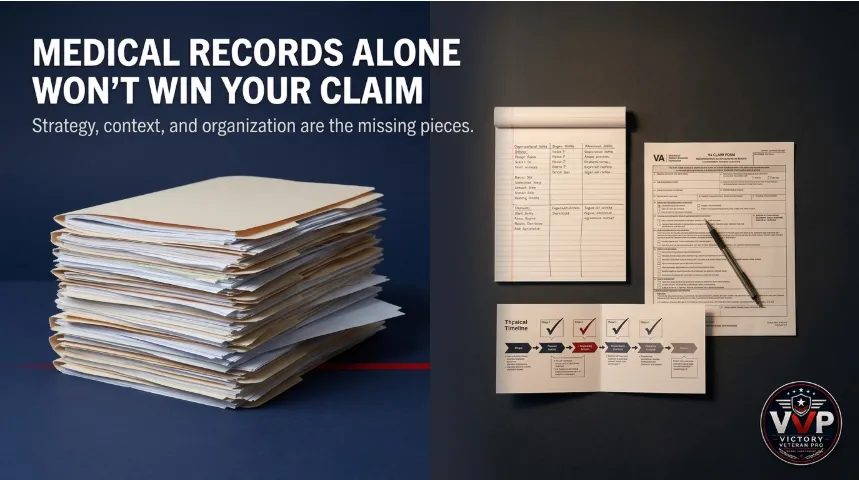
Most veterans believe handing over their VA medical records will carry their claim through. The truth is, those records are just one piece of the puzzle. Without clear claim framing, well-timed evidence, and preparation for the C&P exam, your claim can stall or face denial. In this post, you'll learn what's missing and how focused coaching can help you take control before the September rush fills coaching spots.
Learn more about the evidence needed to file a VA claim.
Why Medical Records Aren't Enough
Many veterans assume that submitting medical records is sufficient for a VA disability claim. This belief is common but misleading.
The Misconception of Sufficiency
It's tempting to think that a stack of medical records guarantees an approved claim. However, the VA looks beyond these records for a complete picture. While medical records are important, they don't tell the entire story. Veterans need to understand that these documents are just a piece of the puzzle. Claims often require additional context, such as how conditions are connected to service, which isn't always apparent from records alone.
Understanding VA Claim Strategy
A successful claim relies on a well-thought-out strategy. This involves understanding what the VA needs to see: clear connections between service and medical conditions. Veterans must present their case in a way that meets VA's criteria. This means knowing how the system works and what evidence holds the most weight. A solid strategy is the backbone of any successful claim.
The Role of Comprehensive Evidence
Every claim needs more than just records. Comprehensive evidence includes nexus letters, lay statements, and other supporting documents. These elements help bridge gaps left by medical records alone. They provide the narrative that ties conditions to military service. Veterans who supply a complete picture are more likely to have their claims approved.
Key Components of a Strong Claim
Each claim needs more than just documentation. Understanding the role of different components can make the difference between approval and denial.
Nexus Letters and Lay Statements
Nexus letters are vital. They explain the link between a veteran's condition and their service. These letters, often written by doctors, clarify how a condition is related to military duties. Lay statements, on the other hand, are personal accounts from family or friends that provide additional context. Both types of evidence add depth to a claim and can be crucial in proving service connection.
The Importance of Claim Framing
How a claim is framed affects its outcome. Clear, concise framing helps the VA understand the claim's merits. Veterans need to present their evidence in a way that's easily digestible and aligned with VA requirements. Proper framing increases the chances of a successful outcome.
Preparing for the C&P Exam
Preparation for the C&P exam is key. This exam assesses the severity of a veteran's condition. Knowing what to expect can alleviate stress and lead to better results. Veterans should familiarize themselves with the exam process and what evaluators are looking for. This preparation helps ensure that the exam accurately reflects their condition's impact on their life.
Taking Control of Your Claim
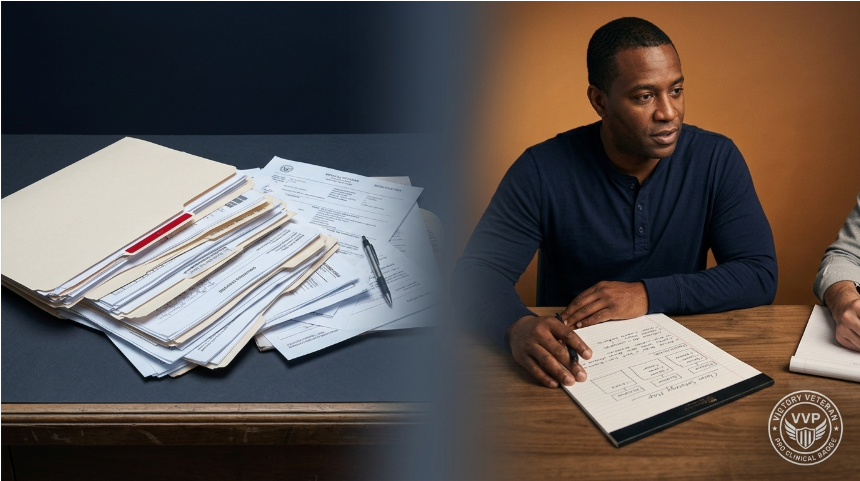
Understanding the process is only part of the battle. Organizing evidence and navigating the system effectively are equally important.
Organizing Your Evidence Effectively
Proper organization of evidence is crucial. A well-organized claim is easier for the VA to evaluate. Veterans should categorize documents clearly and ensure all necessary information is included. This not only speeds up the process but also reduces the chance of denial due to missing information. Creating a checklist can be a helpful tool in staying organized.
Navigating VA Timelines and Denials
VA timelines can be frustrating. Knowing what to expect helps veterans prepare for potential delays. If a claim is denied, understanding the reasons why is essential. Veterans should be ready to gather additional evidence or provide further clarification. Persistence and preparation are key to overcoming these hurdles.
Benefits of Flat-Fee Veteran Coaching
Flat-fee coaching offers clarity and guidance. It provides veterans with the knowledge and tools needed to navigate the claims process. Coaching focuses on education and empowerment, helping veterans take control of their claims. With a clear understanding and strategic approach, veterans can move forward with confidence.
Frequently Asked Questions
What is a nexus letter, and why is it important?
A nexus letter is a document from a medical professional that links a veteran's condition to their military service. It's vital because it provides the necessary connection the VA needs to approve a claim.
How can lay statements support my claim?
Lay statements offer personal insights and observations from friends or family about how a veteran's condition affects their life. They provide additional context that can support the claim's validity.
What should I expect during the C&P exam?
The C&P exam evaluates the severity of your condition. Expect to discuss your symptoms and how they impact your daily life. Being prepared can help ensure the exam accurately reflects your situation.
How does flat-fee coaching work, and what are its benefits?
Flat-fee coaching offers guidance without hidden costs. It provides education and support, helping veterans understand the claims process and improve their chances of success.
What steps should I take if my claim is denied?
If denied, review the denial reasons carefully. Gather additional evidence or clarification if needed, and consider appealing the decision. Persistence and preparation are key to navigating a denial.

Transparency Matters
Victory Veteran Protection is a private, veteran-owned business and is not affiliated with the U.S. Department of Veterans Affairs (VA). We are not a Veterans Service Organization (VSO), accredited representative, attorney, or authorized VA claims agent.
We provide claim preparation education, coaching support, and educational consulting, but veterans remain responsible for preparing and submitting their own VA disability claims.
Free assistance may be available through VA-accredited representatives and organizations such as the American Legion, DAV, VFW, state veteran affairs offices, and other accredited professionals. Choosing to work with Victory Veteran Protection is entirely voluntary.
Any examples, statistics, or results referenced on this website are based on general experiences and do not guarantee outcomes. Every VA claim is unique, and results will vary.
The information provided on this website is for educational purposes only and should not be considered legal or medical advice.


© 2026 Victory Veteran Protection, LLC