For Veterans
Blogs
When a Weak Service Connection Sinks a Well-Documented VA Disability Claim—and How to Fix It
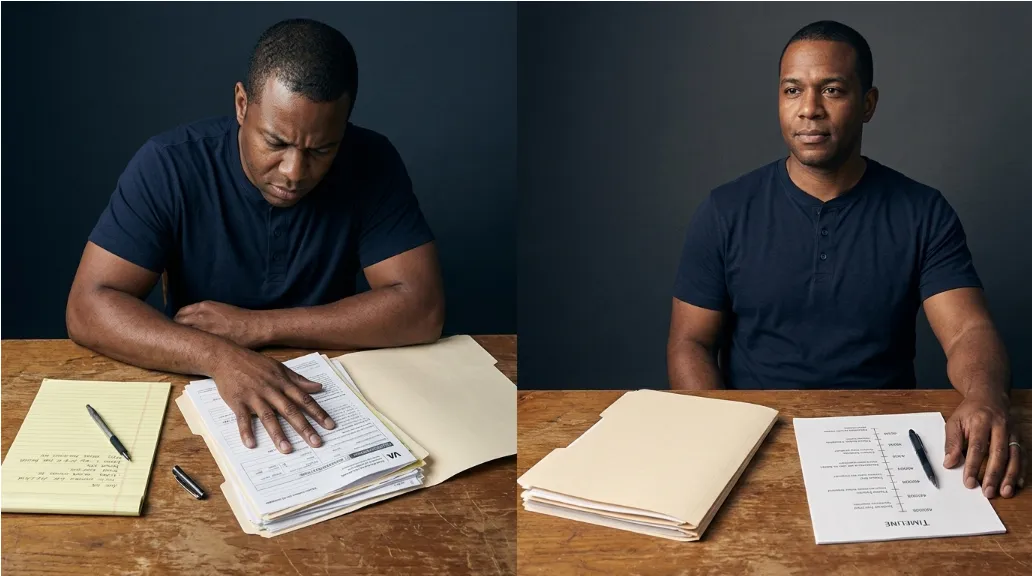
You’ve gathered all the medical records and filled out your forms, but your VA disability claim still feels stuck. The problem isn’t missing proof—it’s that the connection to your service isn’t clear enough. Without a strong service connection, even well-documented conditions can stall. Let’s break down how to tighten that link and build a claim strategy that puts you back in control before you file. For more information on filing a claim, visit here.
Understanding Service Connections
The feeling of having all your documents but still not enough can be frustrating. The key is understanding how to strengthen the service connection in your claim.
The Core of a VA Disability Claim
At the heart of every successful VA disability claim is a solid service connection. It links your condition directly to your military service. Without this, even the most thorough documentation might not be enough. So, it's crucial to make this connection clear and undeniable.
Common Missteps in Service Connection
A frequent mistake veterans make is assuming their medical records alone will suffice. While documentation is vital, it's just one piece of the puzzle. Many claims falter because they lack a coherent narrative that ties the condition to service. It's essential to avoid these gaps by ensuring your story is complete and supported by evidence.
Creating a Clear Nexus Story
Crafting a compelling nexus story is about connecting the dots between your condition and your service. This story should be clear and concise, supported by medical opinions, and corroborated by witnesses if possible. It's not just about saying the link exists; it's about proving it with evidence and logic.
Building a Strong Claim Strategy
With a clearer understanding of service connections, you can now focus on crafting a strong claim strategy that highlights this link.
Mapping the In-Service Event
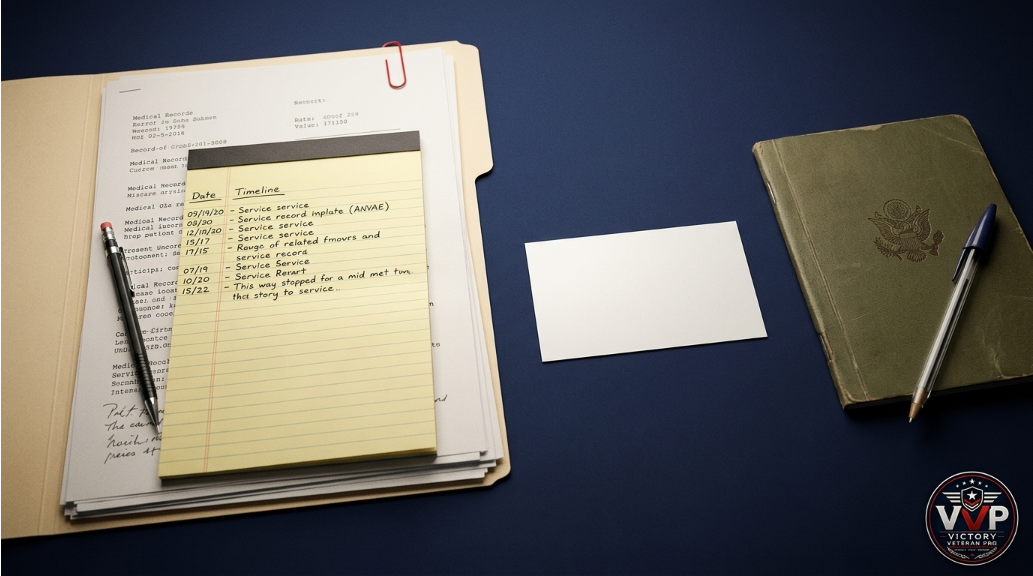
Start by pinpointing the exact event in service that relates to your condition. Document all details, including dates, locations, and any immediate medical care. This mapping creates a foundation for your claim strategy.
Crafting a Timeline of Symptoms
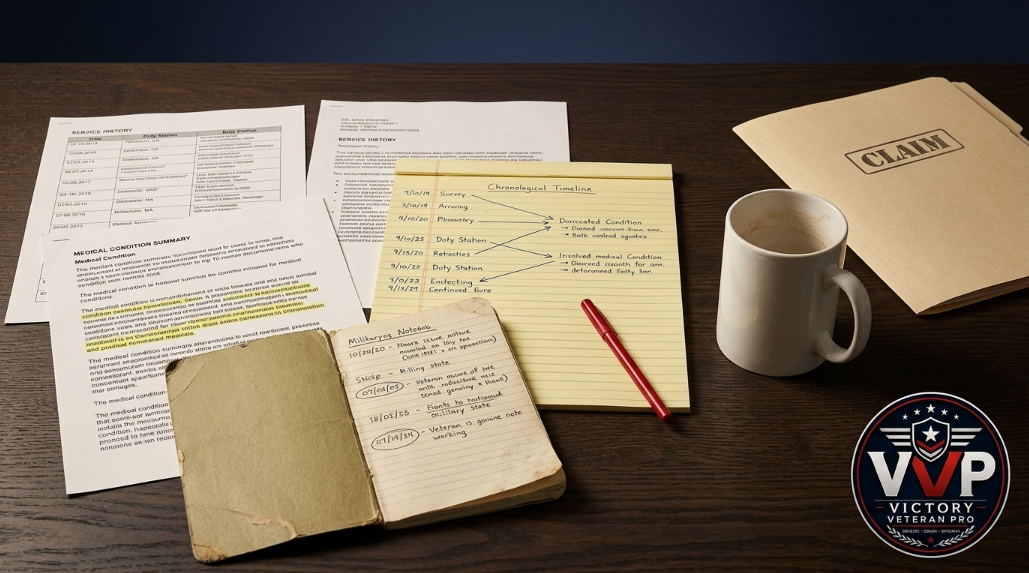
Next, build a timeline that shows the continuity of your symptoms from the service event to the present. This helps demonstrate that your condition is ongoing and linked to your time in the military. A clear timeline can make the difference in showing the validity of your claim.
Utilizing Medical Nexus and Buddy Statements
A medical nexus letter from a healthcare provider can be pivotal. It should explicitly state the connection between your condition and service. Additionally, buddy statements from fellow service members who witnessed the event or know your situation can add weight to your claim.
Steps to Strengthen Your Claim
Once your strategy is outlined, it's time to refine and strengthen it further.
Slowing Down and Reviewing Evidence
Take the time to review all your evidence carefully. Ensure that every piece supports your service connection story. Rushing can lead to overlooked details that might weaken your claim.
Filling Gaps with Veteran Coaching
Consider seeking veteran coaching to help identify any gaps in your evidence or narrative. An experienced coach can offer insights and suggest ways to bolster your claim. Their guidance can turn uncertainty into clarity and confidence.
Preparing for Filing with Confidence
With a strong service connection and well-organized evidence, you can prepare for filing with confidence. Take a moment to ensure everything is in order before submission. This preparation can increase your chances of a successful outcome.
Frequently Asked Questions
What is a service connection in a VA disability claim?
A service connection is the link between your current disability and your military service. It's essential for a successful VA disability claim, as it proves that your condition was caused or worsened by service.
How can I prove my service connection?
You can prove a service connection by providing medical records, a medical nexus letter, and buddy statements that tie your condition to an in-service event. Clear documentation and a cohesive narrative are key.
What is a nexus letter, and why is it important?
A nexus letter is a statement from a medical professional that connects your disability to your military service. It's crucial because it provides an expert opinion supporting your claim.
How can veteran coaching help my claim?
Veteran coaching can help identify weaknesses in your claim, suggest evidence improvements, and guide you in creating a stronger narrative. They provide expert advice and support throughout the process.
What should I do if my claim is denied?
If your claim is denied, don't lose hope. Review the decision letter, identify areas that need strengthening, and consider filing a Higher-Level Review or Supplemental Claim. Seek guidance to improve your resubmission.

Transparency Matters
Victory Veteran Protection is a private, veteran-owned business and is not affiliated with the U.S. Department of Veterans Affairs (VA). We are not a Veterans Service Organization (VSO), accredited representative, attorney, or authorized VA claims agent.
We provide claim preparation education, coaching support, and educational consulting, but veterans remain responsible for preparing and submitting their own VA disability claims.
Free assistance may be available through VA-accredited representatives and organizations such as the American Legion, DAV, VFW, state veteran affairs offices, and other accredited professionals. Choosing to work with Victory Veteran Protection is entirely voluntary.
Any examples, statistics, or results referenced on this website are based on general experiences and do not guarantee outcomes. Every VA claim is unique, and results will vary.
The information provided on this website is for educational purposes only and should not be considered legal or medical advice.


© 2026 Victory Veteran Protection, LLC