For Veterans
Blogs
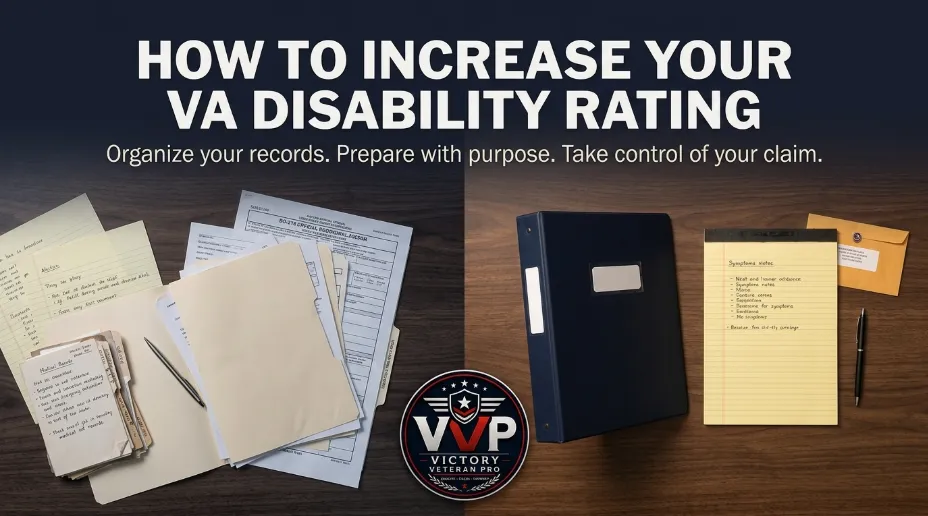
How to Increase Your VA Disability Rating: Organize Evidence, Prepare with Purpose, Own Your Claim
You probably already know your condition has worsened or was underrated, but the VA process still feels like an uphill battle. The missing link isn’t more claims or forms—it’s a clear, organized paper trail and knowing which evidence counts most. Here’s how to increase your VA disability rating by taking control: organize your records, track symptoms, and prepare smartly for your C&P exam so you step into every stage with confidence. For more guidance, explore resources on how to organize claim evidence.
Common Blockers to VA Rating Increase
Navigating the VA system can be challenging, but understanding common obstacles can put you on the right path. Let's identify these hurdles and how to overcome them.
Disorganized Records and Evidence
Many veterans struggle because their records are scattered, making it tough to present clear evidence. To improve your VA disability rating, you need a complete and organized paper trail. Start by gathering all your relevant documents. Keep them in one place, and ensure they are easily accessible. This allows you to present a strong case with supporting evidence when needed.
Unclear Symptom History
A vague symptom history can weaken your claim. It's important to maintain detailed records of your symptoms over time. Jot down changes, severity, and any new symptoms. This ongoing documentation helps you show the progression and impact of your condition, making your case more compelling.
Understanding VA Claim Process
The VA claim process can feel like a maze. Learning how it works is crucial. Familiarize yourself with each step, from submission to decision. Knowing what to expect reduces surprises and helps you prepare for what’s next, turning confusion into clarity.
Organize Your VA Claim Evidence
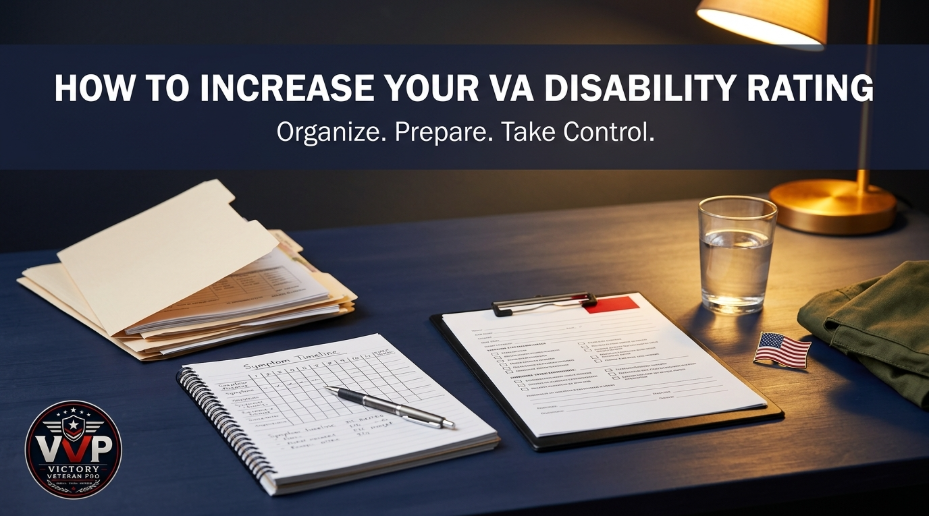
Once you pinpoint common blockers, it's time to organize your evidence effectively. A well-structured approach gives you a solid foundation to build your claim on.
Gather All Medical Records
Your journey begins with collecting every medical record related to your condition. This includes doctor visits, hospital stays, and treatment plans. Requesting copies from healthcare providers ensures you have a comprehensive view of your medical history. These documents form the backbone of your claim, supporting every statement you make with official records.
Track Symptom Changes Over Time
Consistent tracking of symptoms provides a timeline of your condition. Use a journal or digital tool to note daily experiences. Record what you feel, when it occurs, and any triggers. This detailed account serves as powerful evidence, illustrating how your condition affects daily life and strengthens your argument for a higher rating.
Create an Effective Evidence Tracker
An evidence tracker helps manage and update your documents efficiently. Create a simple spreadsheet or use an app designed for document management. Include columns for dates, document types, and key details. This organized system allows you to quickly find and present evidence when needed, ensuring nothing gets overlooked. For more tips, check out this Reddit discussion on organizing claims.
Prepare for the C&P Exam with Purpose

Preparation for the C&P exam is vital. It’s not just about having the documents; it's about presenting them effectively. Here's how to make the most of this crucial step.
Understand C&P Exam Expectations
Knowing what happens during a C&P exam can ease your nerves. The exam assesses your condition and how it relates to your claim. Expect questions about your daily life, symptoms, and medical history. Being prepared with answers and documents helps you convey your situation clearly, leaving no room for doubt.
Develop a Clear Narrative
Crafting a clear narrative is key to making your case. Start by outlining your condition's impact on your life. Use storytelling to connect your evidence with real-life experiences. This narrative helps examiners understand your perspective, making your claim more relatable and compelling.
Utilize VA DBQ Forms and Nexus Letters
VA Disability Benefits Questionnaires (DBQs) and nexus letters are powerful tools. DBQs provide specific medical information required by the VA, while nexus letters link your condition to military service. Ensure these documents are detailed and completed by qualified professionals, adding weight to your claim.
Frequently Asked Questions
What is a nexus letter, and why is it important?
A nexus letter is a document from a medical professional that connects your condition to military service. It is crucial because it provides a clear medical opinion supporting your claim, often playing a key role in the VA's decision-making process.
How can I track my symptoms effectively?
Using a journal or digital app can help track symptoms. Note daily changes, severity, and triggers. Consistent tracking over time offers a comprehensive view of your condition, strengthening your case for a higher rating.
What should I expect during a C&P exam?
During a C&P exam, a medical professional will assess your condition's impact on your life. Be ready to discuss your daily activities, symptoms, and medical history. Having organized evidence and a clear narrative will help you present your case effectively.
By addressing these steps and preparing thoroughly, you can navigate the VA disability rating process with confidence and clarity. Take control, organize your evidence, and present your case with purpose.

Transparency Matters
Victory Veteran Protection is a private, veteran-owned business and is not affiliated with the U.S. Department of Veterans Affairs (VA). We are not a Veterans Service Organization (VSO), accredited representative, attorney, or authorized VA claims agent.
We provide claim preparation education, coaching support, and educational consulting, but veterans remain responsible for preparing and submitting their own VA disability claims.
Free assistance may be available through VA-accredited representatives and organizations such as the American Legion, DAV, VFW, state veteran affairs offices, and other accredited professionals. Choosing to work with Victory Veteran Protection is entirely voluntary.
Any examples, statistics, or results referenced on this website are based on general experiences and do not guarantee outcomes. Every VA claim is unique, and results will vary.
The information provided on this website is for educational purposes only and should not be considered legal or medical advice.


© 2026 Victory Veteran Protection, LLC